
Introduction
Your vehicle’s front suspension plays a central role in how your car drives, handles, and responds to the road. While many drivers focus on the engine or brakes, the car front suspension system works continuously behind the scenes to maintain stability, absorb impact, and keep your tires firmly planted on the road.
Every bump, pothole, corner, and sudden stop puts pressure on the automobile front suspension. When this system functions properly, your vehicle feels smooth, controlled, and predictable. When it begins to fail, you notice instability, uneven tire wear, poor steering response, and reduced braking efficiency.
Understanding how your front suspension works — and knowing when it needs professional auto suspension repair — helps you protect your safety and avoid costly mechanical damage.
In this guide, you will learn:
- What the front suspension system is and how it functions
- Why it is critical for vehicle safety and handling
- The key components that make up the system
- Common warning signs that indicate suspension problems
What Is Front Suspension?
The front suspension is the system of components located at the front of your vehicle that connects the chassis to the front wheels. Its primary job is to:
- Absorb road shock
- Support vehicle weight
- Maintain tire contact with the road
- Stabilize steering and cornering
Unlike the rear suspension, the front system also works closely with the steering mechanism. This connection makes it essential for precise directional control.
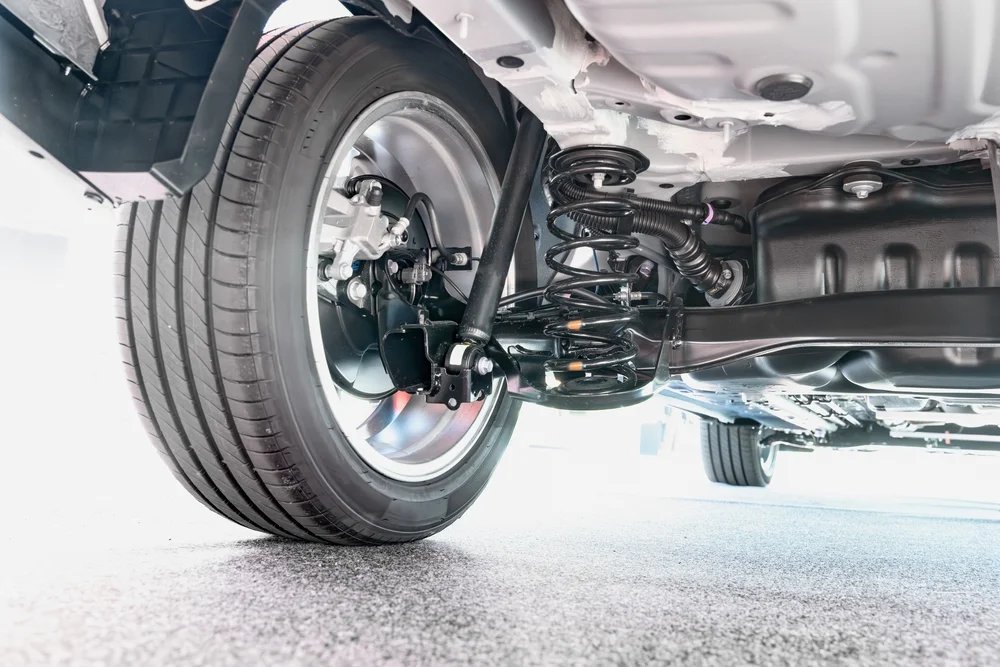
The car front suspension system typically includes:
- Shocks or struts
- Coil springs
- Control arms
- Ball joints
- Sway bars
- Bushings
These parts operate together to manage movement, control vibration, and maintain proper wheel alignment.
Without a properly functioning front suspension, your vehicle cannot deliver stable handling or predictable steering.
Why the Automobile Front Suspension Is Critical for Safety and Handling
The automobile front suspension does far more than improve ride comfort. It directly affects safety, braking performance, and steering control.
Here’s why it matters.
1. Maintains Steering Precision
Your steering system depends on suspension stability. When suspension components wear out, steering may feel loose or delayed. This lack of precision increases risk during:
- Sudden lane changes
- Emergency maneuvers
- High-speed driving
A healthy front suspension keeps steering tight and responsive.
2. Improves Braking Stability
During braking, weight shifts toward the front of the vehicle. The front suspension absorbs this force and stabilizes the chassis.
If shocks or struts are worn, you may notice:
- Nose diving
- Increased stopping distance
- Reduced brake efficiency
Functional suspension components support consistent braking performance.
3. Keeps Tires Firmly on the Road
Traction depends on consistent tire contact. When the front suspension fails, tires may bounce or lose grip, especially on uneven roads.
Reduced traction increases the risk of:
- Skidding
- Hydroplaning
- Loss of control
A properly maintained suspension system enhances road grip and overall stability.
4. Prevents Uneven Tire Wear
Worn suspension components often cause misalignment and uneven pressure distribution. This issue leads to:
- Premature tire replacement
- Reduced fuel efficiency
- Decreased driving comfort
Routine inspections and timely auto suspension repair protect both your tires and your budget.
5. Enhances Overall Driving Comfort
Although safety comes first, comfort remains important. A healthy front suspension system absorbs vibrations and minimizes harsh road feedback.
The result:
- Smoother rides
- Reduced driver fatigue
- Improved long-distance comfort
Comfort and safety go hand in hand.
What You Will Learn in This Guide
Many drivers ignore suspension maintenance because they do not fully understand how the system works. This guide breaks down complex mechanical concepts into clear, practical information.
As you continue reading, you will discover:
✔ How the Front Suspension Works
You will learn how springs, shocks, control arms, and joints work together to absorb impact and stabilize your vehicle.
✔ Key Components of the Car Front Suspension System
We will explain each major component, its function, and how it contributes to safe vehicle operation.
✔ Common Signs of Suspension Problems
You will identify warning signs such as unusual noises, rough rides, steering instability, and uneven tire wear.
✔ When to Schedule Auto Suspension Repair
You will understand when minor wear becomes a serious issue that requires professional attention.
A well-maintained front suspension system protects your vehicle, enhances performance, and ensures safe driving conditions. By recognizing early symptoms and addressing issues promptly, you can avoid costly repairs and maintain full control on the road.
In the next section, we will explore how the front suspension system works in detail and examine the components that keep your vehicle stable and responsive. 🚗
1800 words
Introduction
Your vehicle’s front suspension system plays a critical role in safety, steering control, ride comfort, and overall vehicle performance. While many drivers focus on engine power or braking performance, the car front suspension system determines how well your vehicle handles bumps, corners, sudden stops, and uneven road surfaces.
Every mile you drive places stress on the automobile front suspension. Potholes, speed bumps, rough pavement, sharp turns, and emergency braking all force the system to absorb impact and stabilize the vehicle. When it functions properly, you experience smooth handling, steady steering, and confident braking. When it begins to wear out, your vehicle may feel unstable, bouncy, or difficult to control.
Understanding how the front suspension works and recognizing early signs of failure can help you avoid expensive damage and reduce safety risks. Timely auto suspension repair protects your tires, steering components, and braking system while restoring proper vehicle balance.
In this comprehensive guide, you will learn:
- What front suspension is and how it functions
- Why the automobile front suspension is essential for safety and handling
- The key components inside a car front suspension system
- Early warning signs that indicate suspension problems
- When to schedule professional auto suspension repair
By the end of this article, you will understand why maintaining your front suspension is not optional — it is essential.
What Is Front Suspension?
The front suspension is the mechanical system that connects the front wheels to the vehicle’s frame or chassis. Its primary purpose is to absorb road shock, support vehicle weight, maintain tire contact, and stabilize steering.
Unlike the rear suspension, the front suspension works directly with the steering system. This dual role makes it one of the most important systems in your vehicle.
At its core, the car front suspension system allows the wheels to move independently from the vehicle body. When you hit a bump, the suspension compresses and rebounds to absorb the force instead of transferring it directly into the cabin.
A properly functioning automobile front suspension performs three main tasks:
- Absorbs road impact
- Maintains wheel alignment and tire contact
- Supports steering and directional control
Without this system, driving would feel unstable, harsh, and unpredictable.
How the Car Front Suspension System Works
To understand why front suspension maintenance matters, you must first understand how suspension works.
When your vehicle travels over uneven terrain, the wheels move up and down. The suspension system controls this motion using a combination of springs, dampers, and linkages.
Here’s how the system operates in real-world driving conditions.
Absorbing Road Shock
When your tire hits a bump:
- The wheel moves upward.
- The spring compresses to absorb the force.
- The shock absorber or strut controls the rebound.
- The wheel returns to its normal position.
Without shock absorbers, the vehicle would continue bouncing after every bump. Shocks and struts dampen movement to keep the ride smooth and controlled.
Managing Weight Distribution
During braking, weight shifts toward the front of the vehicle. During acceleration, weight shifts toward the rear. During turns, weight shifts side to side.
The front suspension system stabilizes these weight transfers by:
- Controlling forward dive
- Reducing body roll
- Maintaining tire grip
- Supporting steering precision
This balance ensures safe braking and cornering.
Maintaining Tire Contact
Traction depends on consistent tire contact with the road. If the suspension fails to keep the tires planted, traction decreases.
Poor suspension control can cause:
- Skidding
- Reduced braking performance
- Steering instability
- Loss of control in wet conditions
The automobile front suspension keeps tires firmly connected to the driving surface.
Key Components of an Automobile Front Suspension
The front suspension system contains multiple interconnected parts. Each component plays a specific role in vehicle stability and safety.
1. Shocks and Struts
Shocks and struts control vertical movement. They prevent excessive bouncing and maintain stability.
- Shocks work alongside separate springs.
- Struts combine a shock absorber and structural support into one unit.
Most modern vehicles use MacPherson struts in the front suspension system.
2. Coil Springs
Coil springs support the weight of the vehicle and absorb impact from the road. They compress and expand as the wheels move over uneven surfaces.
Broken or sagging springs can cause:
- Uneven ride height
- Poor handling
- Tire wear issues
3. Control Arms
Control arms connect the suspension to the vehicle frame. They allow controlled up-and-down wheel movement.
Worn control arms may lead to:
- Clunking noises
- Steering instability
- Alignment problems
4. Ball Joints
Ball joints act as pivot points between control arms and steering knuckles. They allow smooth steering and suspension movement.
Failing ball joints can cause:
- Knocking sounds
- Loose steering
- Severe safety risks if they separate
5. Sway Bar (Stabilizer Bar)
The sway bar reduces body roll during turns. It connects the left and right suspension components to stabilize lateral movement.
Damaged sway bar links can cause:
- Excessive leaning
- Reduced cornering stability
- Clunking noises over bumps
6. Bushings
Bushings cushion metal components and reduce vibration. Over time, they wear out due to heat and road stress.
Worn bushings cause:
- Noise
- Excessive vibration
- Reduced ride comfort
Why the Automobile Front Suspension Is Critical for Safety
Many drivers underestimate the safety importance of front suspension. In reality, it directly affects braking, steering, and traction.
Here’s why suspension health matters.
Improves Steering Response
Loose or worn suspension components reduce steering accuracy. You may notice delayed response or drifting.
Accurate steering control becomes critical during:
- Emergency lane changes
- Sudden obstacle avoidance
- Highway driving
A well-maintained front suspension ensures predictable vehicle behavior.
Enhances Braking Stability
When suspension components wear out, weight transfer during braking becomes unstable. This instability increases stopping distance.
Nose diving during braking often indicates worn shocks or struts.
Stable suspension supports even brake force distribution.
Reduces Risk of Tire Blowouts
Uneven suspension stress can cause rapid tire wear. Over time, weakened tire sidewalls increase the risk of blowouts.
Timely auto suspension repair protects both your tires and your safety.
Maintains Vehicle Balance in Turns
During cornering, the suspension stabilizes the chassis. Worn components increase body roll and reduce control.
Stable suspension improves confidence in sharp turns and high-speed curves.
Common Signs of Front Suspension Problems
Recognizing early warning signs prevents expensive repairs and safety hazards.
Watch for these symptoms.
Rough or Bouncy Ride
If your vehicle continues bouncing after hitting a bump, shocks or struts may be worn.
Vehicle Pulls to One Side
Suspension wear can cause alignment imbalance, leading to pulling.
Uneven Tire Wear
Cupped or scalloped tread patterns indicate suspension instability.
Clunking or Knocking Noises
Worn ball joints, control arms, or sway bar links often produce noise over bumps.
Steering Feels Loose
Delayed or vague steering response signals suspension issues.
Front End Dives When Braking
Excessive forward dipping indicates weak front shocks.
Visible Fluid Leaks
Leaking struts or shocks require immediate replacement.
If you experience any of these issues, schedule professional inspection promptly.
When to Schedule Auto Suspension Repair
Preventive maintenance reduces long-term costs.
Consider suspension inspection if:
- Your vehicle exceeds 50,000 miles
- You frequently drive on rough roads
- You recently hit a large pothole
- You were involved in a minor collision
- You notice unusual steering or tire wear
Routine inspections ensure early detection of worn suspension parts.
Why Professional Auto Suspension Repair Matters
Front suspension systems require precise installation and calibration.
Professional repair ensures:
- Correct torque specifications
- Proper wheel alignment
- Safe installation of components
- Manufacturer-compliant parts
Improper DIY repairs can compromise safety and damage other systems.
Certified technicians diagnose issues accurately and prevent repeat failures.
The Bottom Line
Your front suspension system protects your safety, improves handling, and enhances ride comfort. It absorbs road impact, maintains tire traction, stabilizes braking, and supports steering control.
Ignoring suspension problems can lead to:
- Increased stopping distance
- Reduced steering precision
- Premature tire replacement
- Expensive mechanical repairs
Understanding how the car front suspension system works empowers you to take proactive action. Recognizing warning signs early allows you to schedule timely auto suspension repair before minor wear becomes major damage.
A healthy automobile front suspension ensures stable handling, confident braking, and smooth driving performance. Maintaining it is one of the smartest investments you can make for your vehicle’s longevity and your personal safety.
If your vehicle feels unstable, noisy, or uneven, do not delay inspection. Proper suspension maintenance keeps your car safe, responsive, and ready for every road ahead.